Dear Readers, welcome to SC Musings
Discovering Psycho-Social Boundaries: A Personal Journey
To introduce Psycho-Social Boundaries, let me take you back seven decades to my childhood.
Psycho-Social Boundaries have been a recurring theme in my life. I have struggled with them for decades, but it is only recently that I began naming, understanding and exploring this concept.
Growing up with my maternal grandparents, I was surrounded by innumerable grandfathers, grandmothers, aunts and uncles. There was even a ripe old great-grandfather!
Enveloped in the cocoon of a traditional joint family, I had little understanding of what was me and what was mine. It seemed that I was in everything and everyone, and everyone and everything was me. I also had many children to roam around with and enjoyed the freedom of a street kid.
On my paternal side, too, there were fourteen cousins. I belonged everywhere, so there was little sense of identity confusion.
Moving in with my parents and starting school was a rude awakening, bringing me down with a loud thud. The concepts of me and mine slowly began emerging, and confusion reigned.
I alternated between the Compliant and Rebellious Child (Joines, 1976, p. 378). This meant that I either complied blindly with authority or rebelled through procrastination.
Ms. Sundaram, my sixth-standard teacher, helped bring out my identity. She recognised me during the morning assembly, amidst a gathering of students. Further, she gave me an opportunity to perform a mono-act on stage, and the I in me began surfacing.
My dormant Adult ego state (Berne, 2015, pp. 32–34) started tuning in, and I began engaging with studies and learning. Marriage and stepping out socially propelled me further towards establishing an identity and continuing to hone it.
Understanding Psycho-Social Boundaries Through the NG Holistic Model
Let us now revisit the NG Holistic Model of a Human Being and connect my personal narrative to Psycho-Social Boundaries, the central theme of this blog.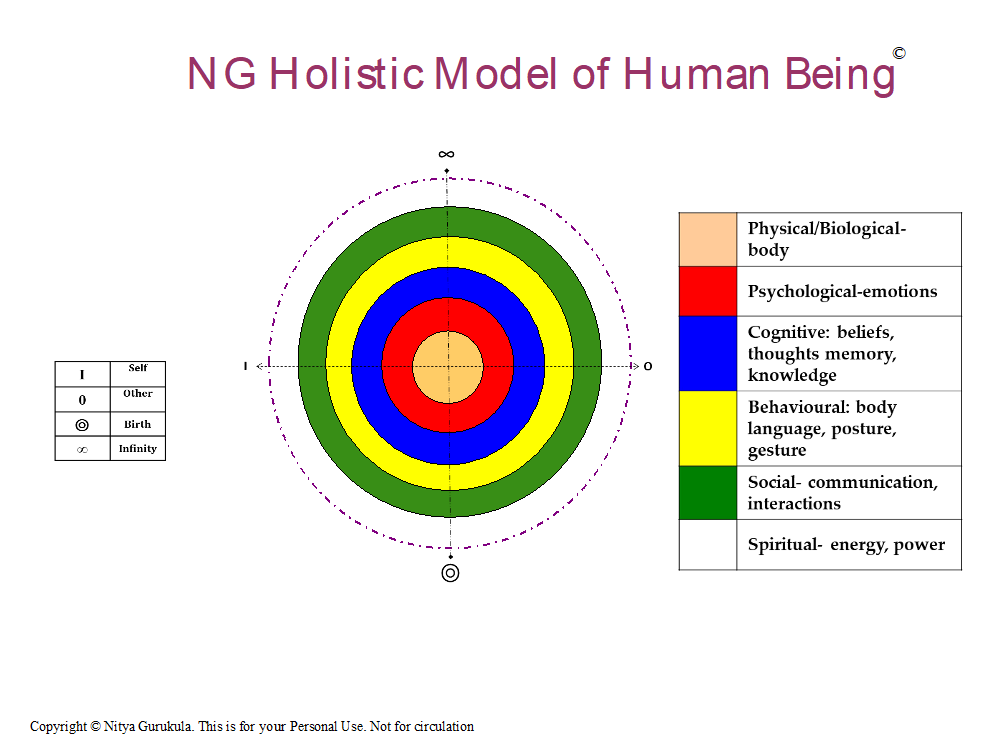
The NG Holistic Model consists of six layers and dimensions:
- Body
- Emotions
- Cognition – Thinking
- Behaviours
- Social
- Spiritual
These layers and dimensions were discussed in detail in Blog 4. Here, I will briefly address the Social and Spiritual layers, as the others are relatively self-explanatory.
Communication and relationships are significant characteristics of the Social layer and dimension. The Spiritual layer represents energy – holistic energy contained within the individual layers as well as collectively across them.
Identity and timeline add space and depth to human existence and subsistence.
The NG Holistic Model of a Human Being is the foundation of a holistic approach to people work. It ensures that NG service receivers are valued and treated as individuals as well as systemic beings.
Boundaries, Self-Awareness and the Flow of Energy
Boundaries between the layers in the NG Holistic Model are useful for enhancing self-awareness.
This happens when we become conscious of our feelings – anxiety, fear, anger, sadness and so on – and learn to name them.
When these boundaries are enmeshed, we may become unaware of what is happening within us, how we are impacting others and how we are responding to the surrounding context.
To explore this further, let us apply Berne’s (2015, pp. 39–41) concept of the permeability of ego state boundaries to the boundaries separating the layers in the NG Holistic Model.
Ego states (Berne, 2018, p. 31), the building blocks of Transactional Analysis, are states of mind (Berne, 2015, p. 30), comprising a person’s thinking, feelings and behaviours.
They are experiential realities that are experienced by individuals, observed by onlookers and verifiable through historical data.
The Parent, Adult and Child ego states – parts of human personality, colloquially known as P, A and C, respectively – are represented in Figure 7.2.
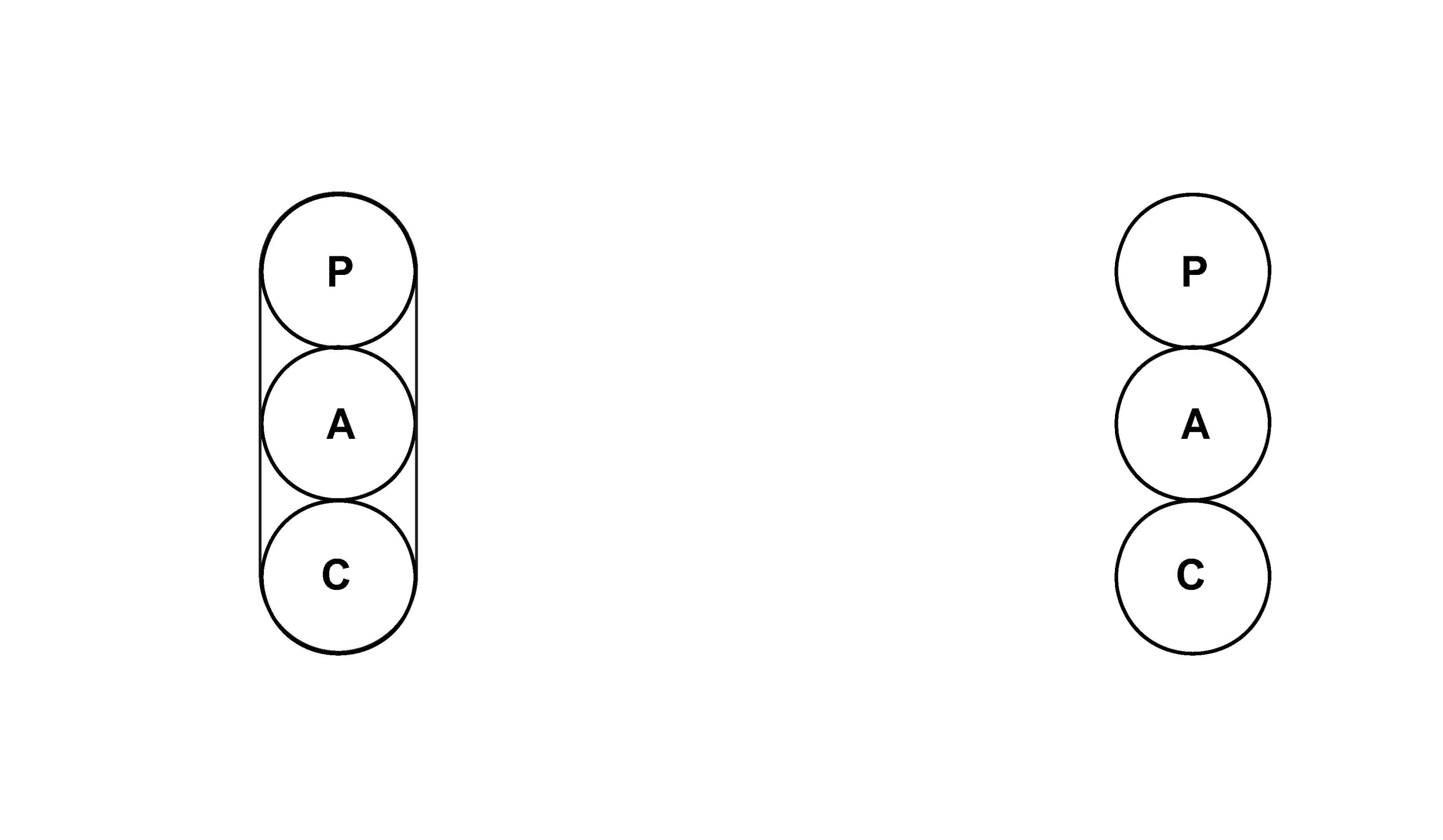
Figure 7.2(a), with a line around the three circles, represents the formal diagram of personality. Figure 7.2(b) is the informal diagram, with only the Parent, Adult and Child ego states represented by three circles labelled P, A and C, respectively.
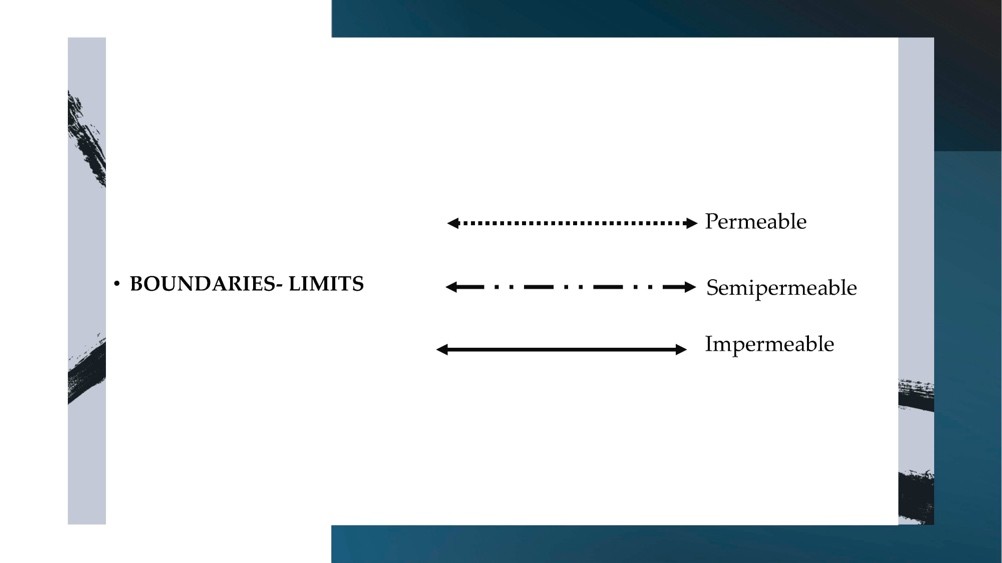
To explain the flow of psychic energy between Parent, Adult and Child ego states, Berne uses the concept of permeability.
According to Berne (2015, pp. 39–41), psychic energy:
- Flows freely between permeable ego state boundaries.
- Becomes restricted by semi-permeable boundaries.
- Is blocked by impermeable boundaries.
Applying Permeability to the Six Layers
When the concept of permeability is applied to the NG Holistic Model, it offers a perspective on how an individual functions.
For example, a person who remains stuck in the Cognitive layer, associated with increased sympathetic nervous system activation, may experience heightened stress levels.
Similarly, emotions expressed impulsively, without a pause to reflect on feelings or behaviours, may indicate limited awareness and integration between the layers.
A free flow of energy between the six layers, across time and space, contributes to a well-balanced person – someone who is comfortable with Self, sensitive to Others and in tune with the Environment.
From Belonging to Identity: My Journey with Boundaries
Coming back to my narrative, I had a strong sense of belonging in both my maternal and paternal families – perhaps a little more on the maternal side, as I spent a substantial part of my early years with them.
Growth and education demanded a firmer identity to communicate and relate with others. Developing skills and competencies while growing up brought a sense of accomplishment and confidence.
During these stages of life, there was little need to consciously think about Psycho-Social Boundaries. They seemed to develop and function ‘naturally’.
Adulthood, marriage and raising children brought about an acute need for Psycho-Social Boundaries.
Some relationships in my personal, professional and organisational life did not require much attention. However, the need to establish boundaries to stay out of psychological games (Berne, 2016), which drain our energy, gradually began to emerge.
This awareness surfaced much, much later, when I realised that my seemingly ‘natural’ social responses were sometimes creating difficulties in communication and relationships.
Why Are Psycho-Social Boundaries Important Today?
Psycho-Social Boundaries emerged as a concept in Nitya Gurukula over the last few years, helping us make meaning of and deal with blocks within the Self and in relationships across all populations – clients, trainees, workshop participants and teamers.
Most of us in India have transitioned, within a relatively short period, from a traditional, relational lifestyle to one that increasingly emphasises individuality and independence.
This transition calls for the conscious and intentional creation and maintenance of Psycho-Social Boundaries across generations.
Physical Boundaries and Psycho-Social Boundaries: What Is the Difference?
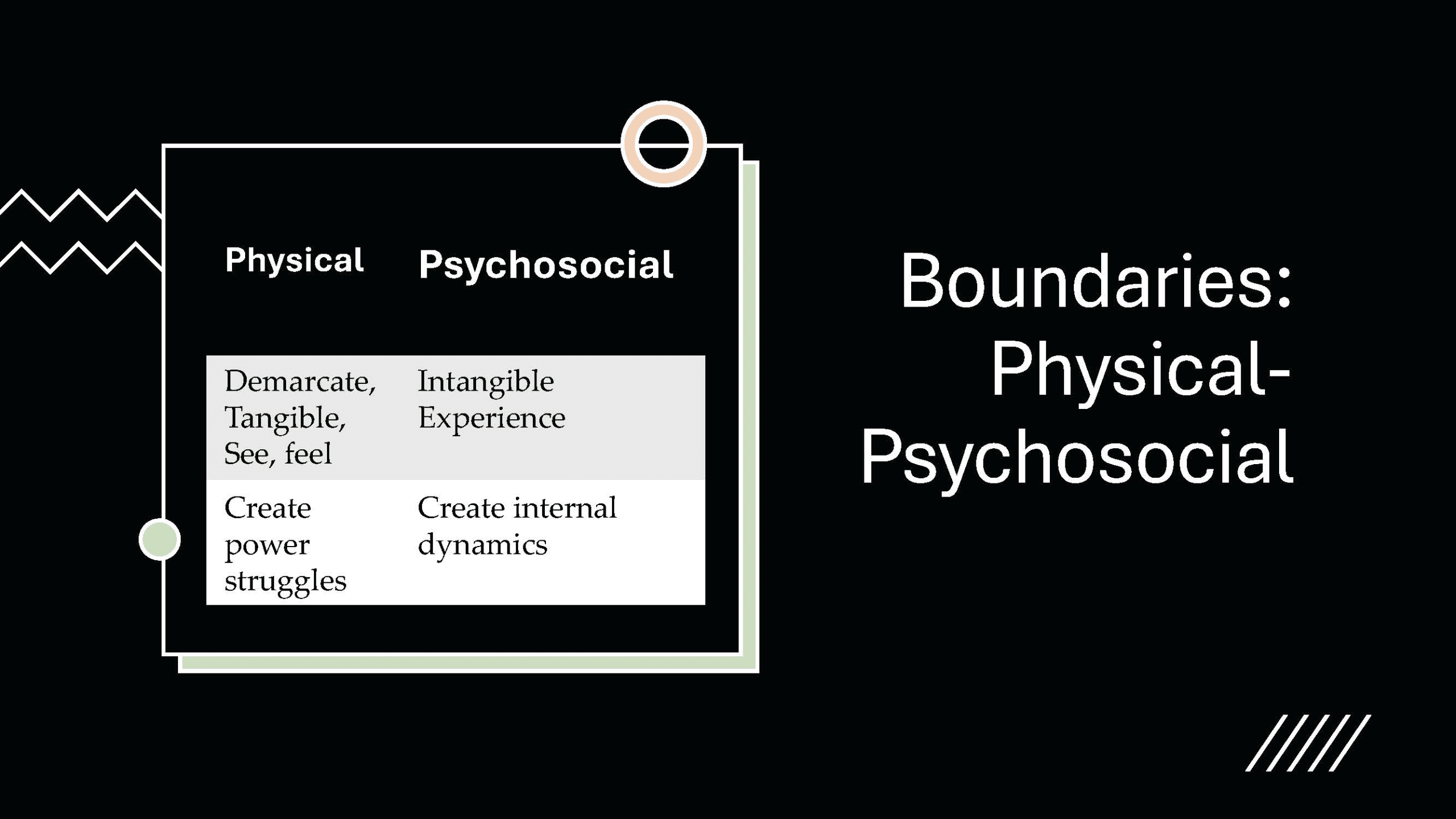
Physical boundaries indicate ownership and serve to contain and control entrances and exits.
For example, boundaries exist between nations, organisations, institutions and family homes.
A lack of clarity about physical boundaries can lead to battles over ownership and control, sometimes ending in wars, as we are witnessing globally.
Psycho-Social Boundaries, however, are often intangible and not clearly defined.
They are determined biologically, socially and culturally, and change over time.
Consider a family. The boundaries between parents and children, and vice versa, change as children grow and relationships evolve.
Clinging to these boundaries long after their relevance has changed can result in unpleasantness and pain, stunting growth and development.
A Tiny Activity for the Next Fortnight
Dear Readers,
We have taken a deep dive into boundaries and Psycho-Social Boundaries in this blog.
I invite you to pause and undertake a mini activity.
Take a peek at the boundaries around you and within you.
Observe both your Physical and Psycho-Social Boundaries.
- What physical boundaries do you notice in your everyday life?
- Where do you experience clear or unclear Psycho-Social Boundaries?
- Are there relationships in which you need to establish or revisit your boundaries?
Simply observe, become aware and reflect.
I would love to hear your experiences and insights!
We will continue exploring Psycho-Social Boundaries in Blog 8, delving deeper into their meaning and relevance to our lives and living, and examining their impact on communication and relationships.
Until then, happy musings!
References
Berne, E. (2015). Transactional Analysis in Psychotherapy: A Systematic Individual and Social Psychiatry. (Original work published 1961). Martino Publishing.
Berne, E. (2016). Games People Play: The Psychology of Human Relationships. (Original work published 1964). New York: Grove Press.
Berne, E. (2018). What Do You Say After You Say Hello? The Psychology of Human Destiny. (Original work published 1972). Corgi Books, London, UK.
Joines, V. S. (1976). Differentiating structural and functional. Transactional Analysis Journal, 6(4), 377–380. https://doi.org/10.1177/036215377600600404